
Safety and Security
The Landscape and Hardscape
Relationship in Our Schools
by Sara Truebridge and Sean Slade
Download This Article as a PDF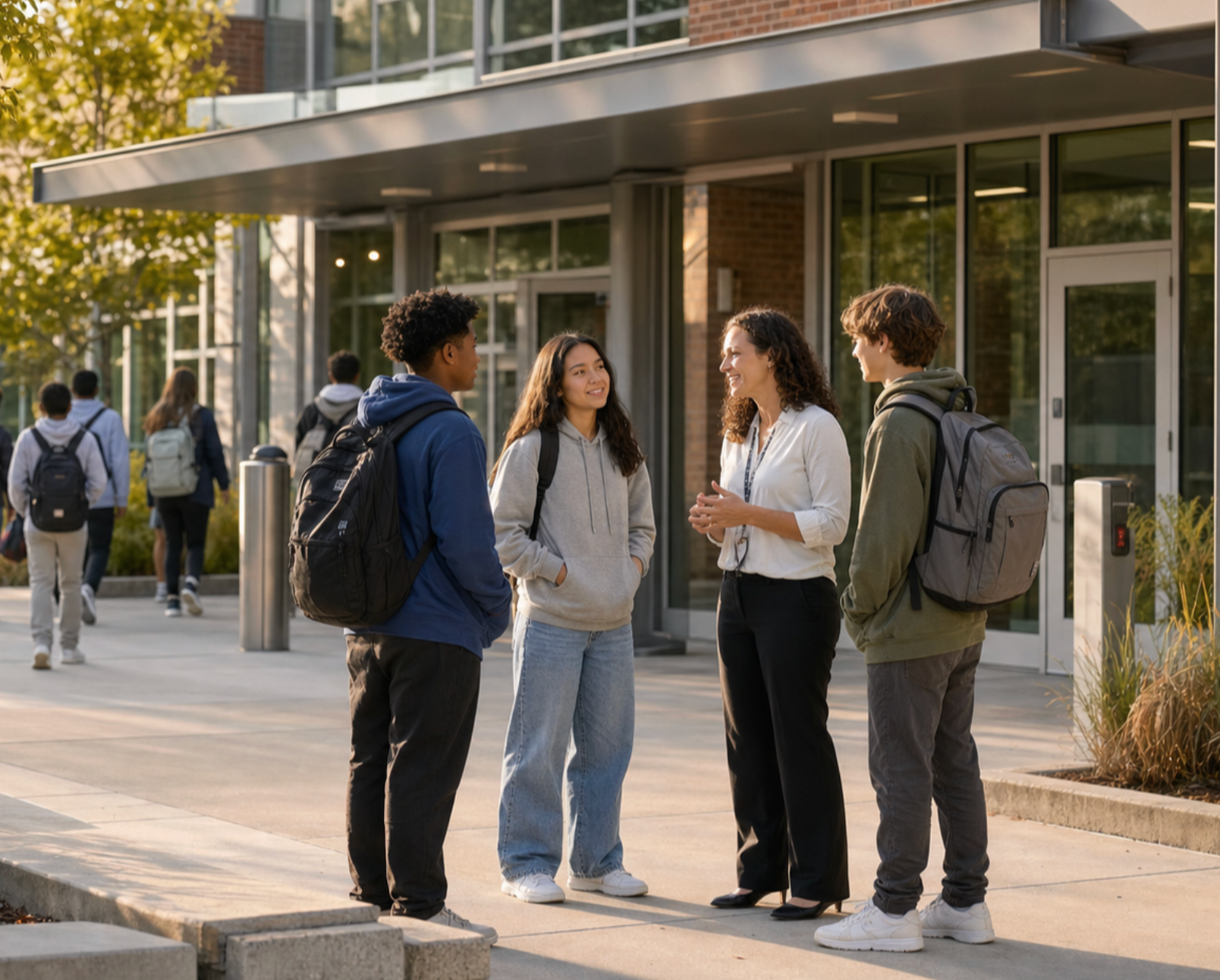
Definitions Matter: Safety vs. Security
When a community sets out to protect its students, the conversation almost always starts in the same place: locks, cameras, badge readers, metal detectors, and school resource officers. These are security measures, and they matter. But security is only half the picture, and treating it as the whole picture leaves schools unprepared and often ill-protected.
It helps to separate the two words we tend to use interchangeably: safety and security.
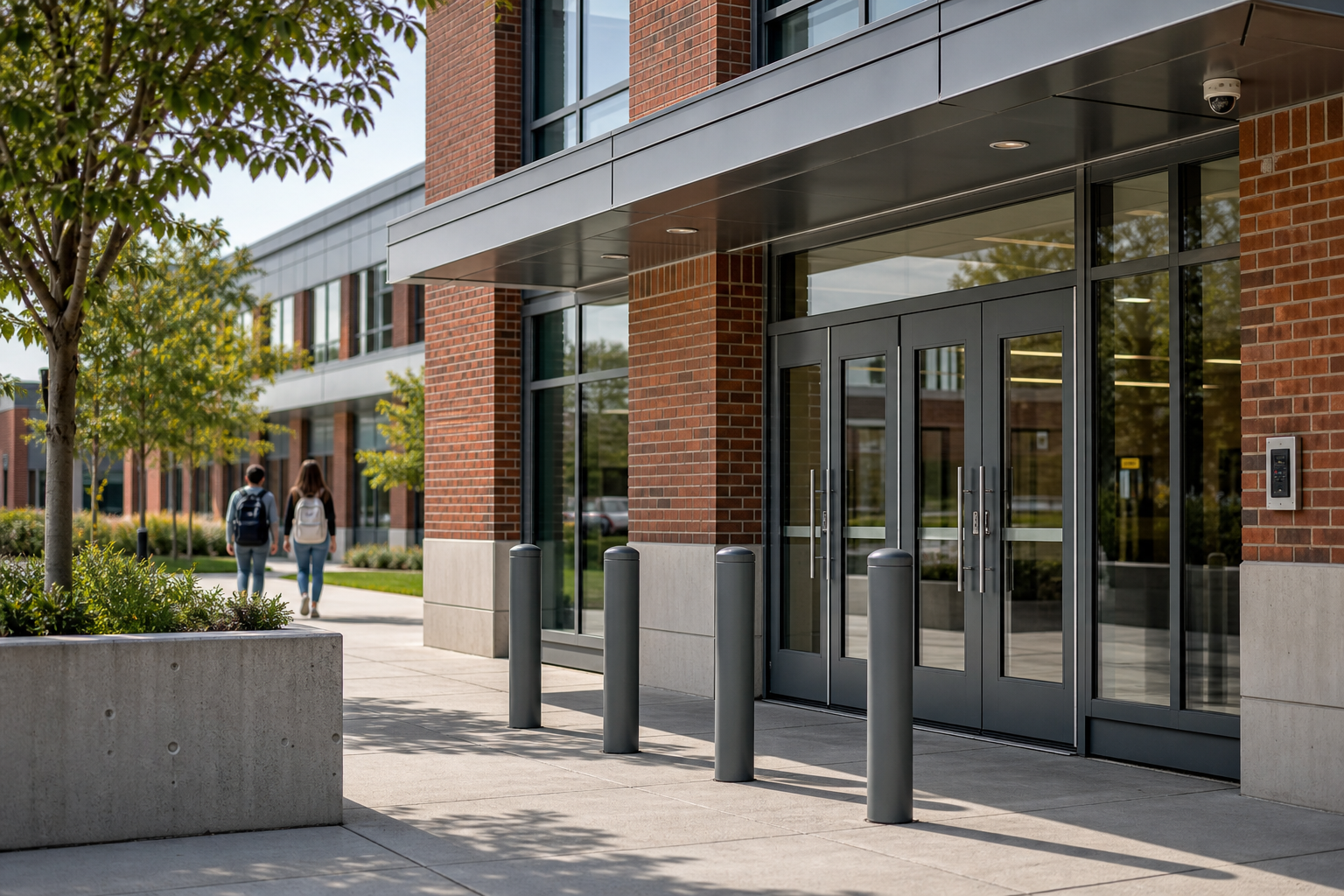
Security is the Hardscape
It is the physical infrastructure built to reduce harm. This includes things such as locked doors, controlled entry points, cameras, drills, and screening equipment. Hardscape is predominantly reactive by design. It exists to blunt the impact of an incident, and a well-built Hardscape genuinely does that job.
Safety is the Landscape
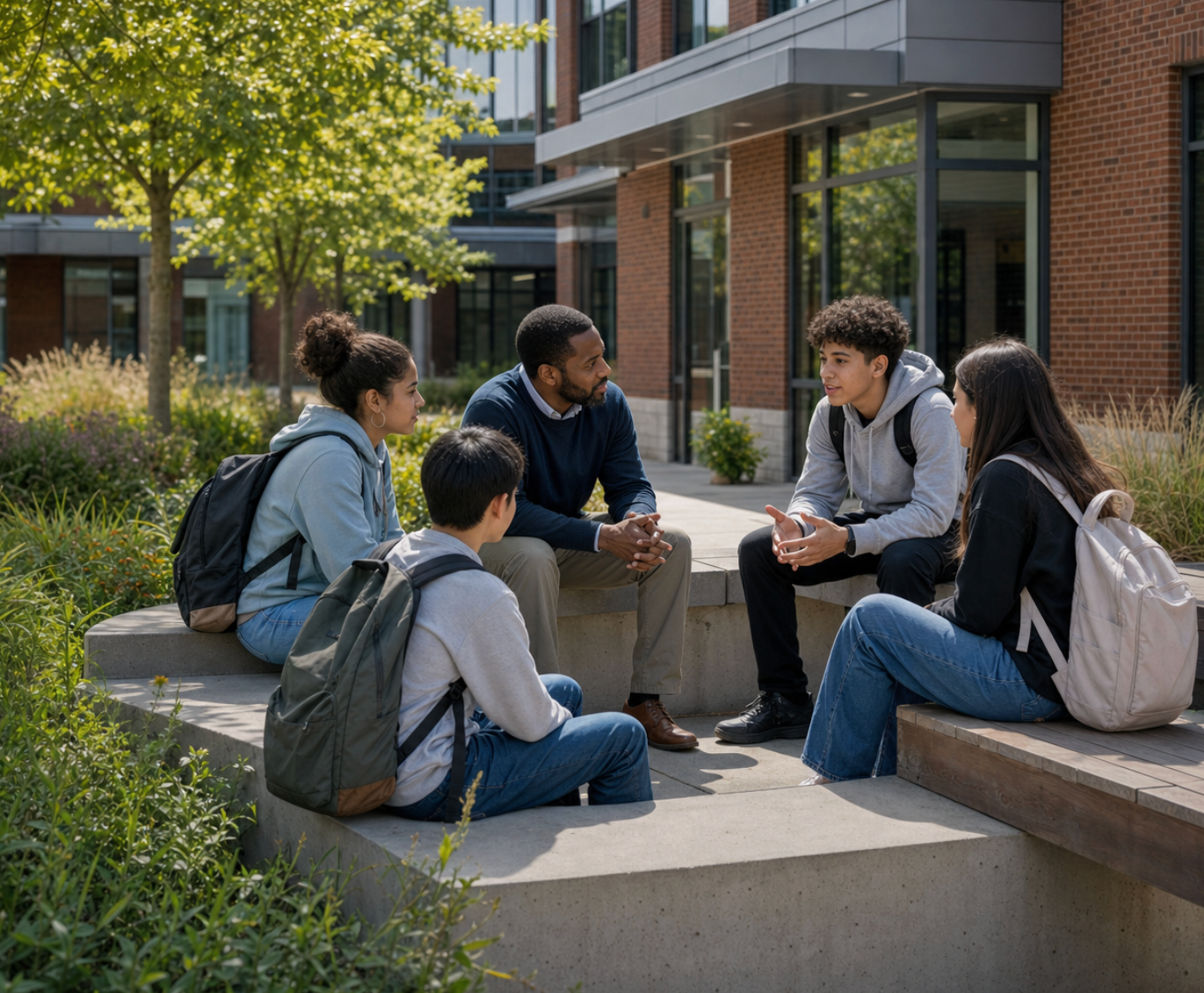
It is the psychological and relational environment that surrounds a student every day, made up of caring relationships, high expectations, and real opportunities to participate and contribute. Landscape is predominantly preventative by design. It is not there to just respond to a crisis; rather, it is there to help stop one from occurring. A safe and connected Landscape is protective. Students who report strong connections to adults in their school and community report lower levels of risk-taking behavior. They also report lower levels of anxiety and depression, as well as higher levels of health and wellbeing. Having a trusted adult you can turn to is one of the most crucial pieces of Landscape infrastructure that we can create. It protects the individual and it helps to develop a culture of belonging. The culture we create and the climate we nurture forms a safety net.
The Importance of the Landscape
Frequently we see connectedness and risk-taking behavior act as opposite ends of a scale.
Higher connectedness equates to:

Lower
Risk-taking
Behavior

Greater
Psychological
Safety

Higher
Educational
Outcomes
The distinction is not just academic. It shows up in how schools spend money, how staff spend time, and how students experience their days. A campus can have excellent locks and an anxious, disconnected student body. It can also have modest security infrastructure and a genuinely strong Landscape, where students feel seen and staff feel supported enough to notice when something is wrong. The first campus is hardened. The second is demonstrating resilience. Ideally, a school is both, but only one of the two is routinely measured, implemented, and budgeted for.
That imbalance carries a cost. A negative or disconnected environment doesn’t stay neutral. It erodes further, because people stop collaborating, stop sharing, and stop trusting the systems and the people around them. It becomes a vicious cycle. A positive, connected environment does the opposite. It becomes a virtuous cycle, where trust generates more trust and small challenges get caught before they become large ones. Hardscape cannot produce that cycle, only Landscape can.
What the Research Says
The research backs up the importance of the Landscape. And the payoff isn’t only in the classroom. Landscape is protective for students and it is a sound investment for the community carrying that cost.

School connectedness is directly linked to reductions in depression, anxiety, and suicidal ideation, with protective effects that last into adulthood (CDC, 2024).
Connected students attend more, achieve more, and graduate at higher rates (Frontiers in Psychology, 2024).
Every student who drops out costs the public an estimated $272,000 over a lifetime, in lost tax contributions, higher Medicaid use, and greater criminal justice involvement (Levin et al., 2007).
The recent trend line from the US Centers for Disease Control and Prevention (CDC) makes the case more urgent. On the CDC’s Youth Risk Behavior Survey, the share of high school students who say they feel close to people at their school fell from 62 percent in 2021 to 55 percent in 2023 (YRBS, CDC), a decline that coincides with reported increases in chronic absenteeism and behavioral challenges nationwide. The drop isn’t evenly distributed, either; it varies across students and population groups. Only 50 percent of girls said they felt close to others at school, compared with 60 percent of boys, and LGBTQ+ students trailed their heterosexual and cisgender peers by 13 percentage points (EdWeek, 2024).
Connectedness isn’t slipping because a lock failed somewhere. It’s slipping because the Landscape around students is thinning, and it’s thinning faster for some students than others.
A Call For Hardscape and Landscape
None of this is an argument against security measures. A locked door is still worth having. The argument is against stopping there. Hardscape answers the question, “What can we do structurally to our building and facility to increase security?” Landscape answers a different question, “How do we build the kind of environment where people feel safe and connected to each other and stop incidences before they reach a breaking point?”
Landscape is harder to build than Hardscape, precisely because it isn’t a purchase order. It requires investments of time and effort in every person in a school, not just investments in the walls around a building. Staff need to feel respected and supported before they have the emotional capacity to extend that same support to students. Families need to feel like genuine partners, not just recipients of communication. Community members and neighbors need real avenues to participate, not just proximity. When any one of those groups is not supported, the effect trickles straight down to the students they surround. It impacts the culture and the climate.
This is also why Landscape is so often overlooked, as it’s difficult to see and even harder to measure. A district can point to its cameras and its badge readers and say, with confidence, “here is our security.” Few districts can point to equally clear evidence of their Landscape, because the environment adults create for one another rarely gets assessed at all. Most schools already survey student climate. Far fewer survey the adults around those students, the teachers, the paraprofessionals, the families, the coaches, and neighbors who make up the wider ecosystem a child grows up in. Without that data, Landscape stays a vague aspiration instead of a measurable, improvable asset, and it’s easy for a school board to fund another camera before it funds the harder, slower work of building trust.
How Safe and Connected is Your District Landscape?
Use the CDC's Youth Risk Behavior Surveillance System (YRBSS) Explorer to check
High school students who strongly agree or agree that they feel close to people at their school
The Most Resilient School Communities Aren’t the Ones That Pick Between Hardscape and Landscape.
They are the ones that stop treating security as a stand-in for safety, and start investing in the school-community environment as deliberately as they invest in the physical infrastructure. That means measuring the adult climate with the same rigor already applied to student climate, and treating a gap in staff morale, family trust, or community engagement as seriously as a broken lock. The doors will do their job. It’s worth asking whether the environment around those doors is doing its job too.
About the Authors

Sara Truebridge, Ed.D., leverages 40+ years of expertise spanning education policy, research, and practice. With a focus on strengths-based resilience, she applies her extensive knowledge to challenges such as student engagement, teacher wellness, equity, and trauma recovery.

Sean Slade is an Australian-American global education strategist based in Washington, D.C. Internationally recognized for his work on Whole Child education — including co-developing the CDC's Whole School, Whole Community, Whole Child (WSCC) model and building the Whole Child Network across 58 countries — he advises organizations including UNESCO, OECD, WISE, and HundrEd.
